

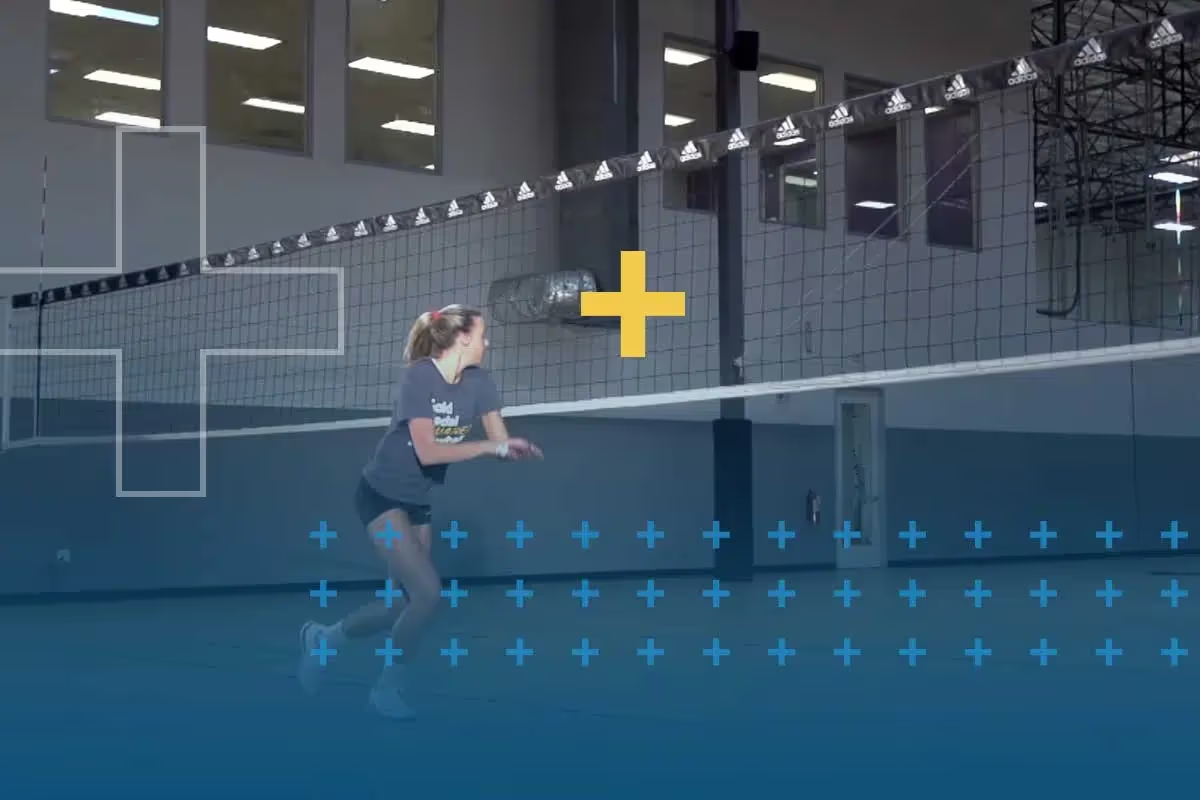
SWING BLOCKING IN VOLLEYBALL – AN INTRODUCTION
GMS has been teaching swing blocking at every level, juniors, collegiate, international, men's and women's, for decades. Today, the overwhelming majority of high-level volleyball programs use it as their primary blocking technique.
That shift didn't happen by accident. Swing blocking produces measurably better results than traditional static blocking: greater jump height, greater blocking area, more hand penetration, and faster movement from point A to point B.
This article covers the foundation, what swing blocking is, why it works, and the four principles GMS uses to teach it. The full technique breakdown with step-by-step footwork, armwork keys, and common coaching traps is inside GMS+.
What Is Swing Blocking?
Traditional blocking uses shuffle footwork while the blocker stays square to the net throughout the move. Swing blocking allows the athlete to open their hips and swing their arms to generate speed and momentum, then square back up at the point of contact.
The result is a faster approach, a higher jump, and more efficient adjustment along the net. The blocker covers more ground and arrives in a better position, without sacrificing technique at the moment of contact.
One Thing Worth Knowing Before You Start
Blocking is not the most important skill at the high school level. Every minute spent on blocking is a minute not spent on serving and passing, and swing blocking takes longer to learn than traditional blocking.
GMS still recommends it, and has for decades. The time investment pays off as athletes develop. But it's worth being intentional about when and how much time you allocate to it, especially with younger or developing rosters.
GMS Blocking Principles
Everything GMS teaches about swing blocking is built on four principles. These are the foundation, they apply to every athlete, at every level, in every system.
- Swing blocking allows blockers to move faster and jump higher
- Hitters hit where the set takes them — blockers must be able to adjust
- Early vision leads to faster movements
- Simplicity equals repeatability
The third principle is where most programs leave points on the table. Blockers who read the setter early, before the set is released, have more time to move and more options when they get there. Teaching early vision is as important as teaching footwork.
The 3-Step Crossover - A First Look
The primary footwork pattern GMS teaches is the 3-step crossover. It's used by the overwhelming majority of top programs worldwide, and the mechanics are consistent from the high school level to the Olympic stage.
The first step is small, intentionally small. The goal on step one is speed, not ground coverage. Many of the best swing blockers in the world take a negative step here. Arms drop to waist height. The move is compact and fast.
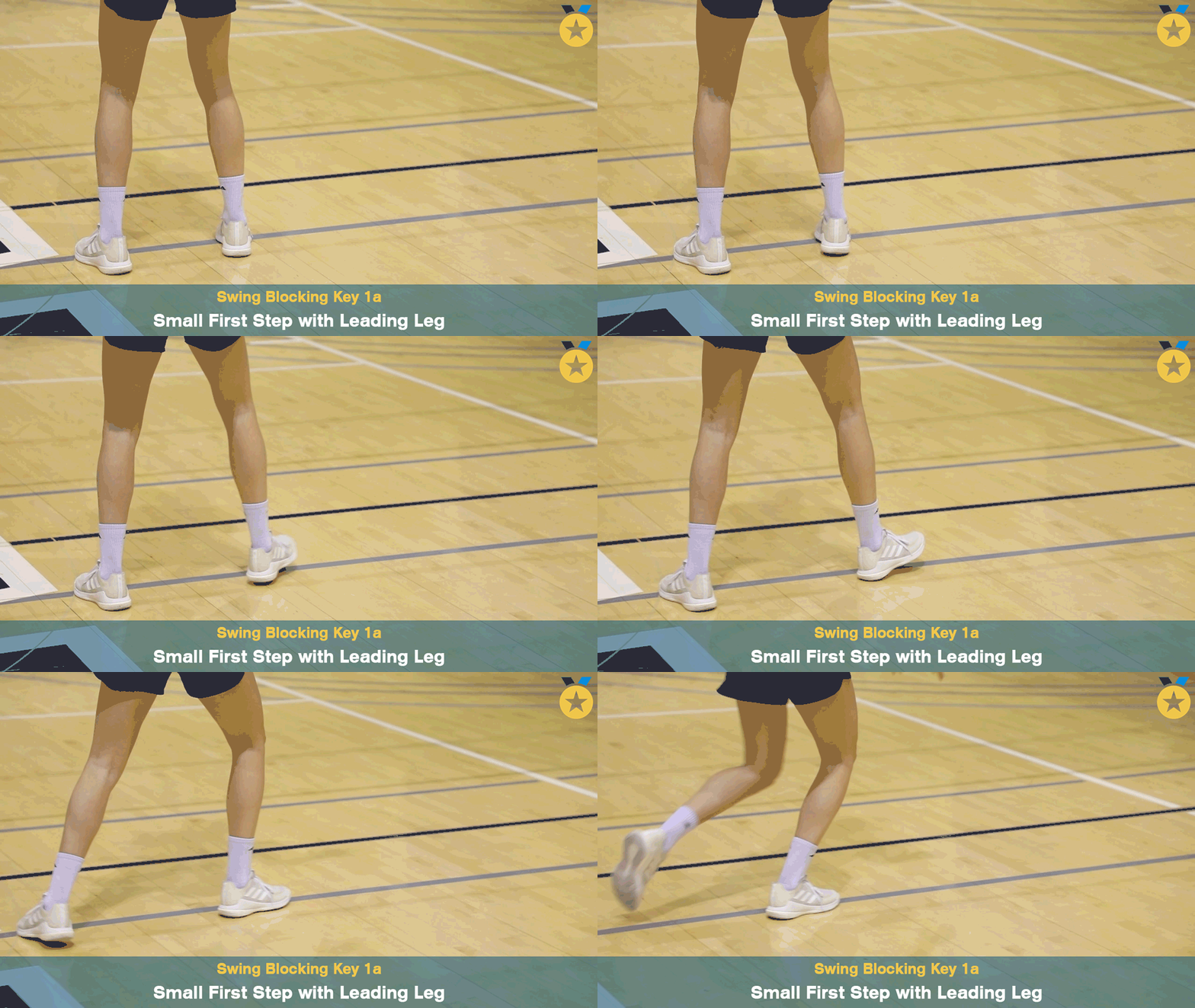
Steps two and three, and the armwork that goes with them, are where the move is made or broken. That full breakdown, including the most common mistakes coaches see at each step, is inside GMS+.
See It in Action
The videos below show the complete 3-step crossover swing blocking move, a right-front blocker and a middle-front blocker running the same pattern from different starting positions.
Notice the consistency between the two athletes: small first step, hands low, big second step, square to the hitter, then square to the net. The only meaningful difference is the size of the second step, which the middle blocker extends to cover more ground.
The Full Breakdown Is Inside GMS+
The guide above gives you the framework and the first step. The full GMS+ guide covers everything you need to actually teach it:
- Steps 2, 3, and 4 of the 3-step crossover, detailed footwork keys with GIF demonstrations
- Armwork: hands down on step one, double arm lift on step two, elbow bend at the jump
- Fast hands over the net, the most commonly misunderstood part of the move
- The five most common traps coaches see when teaching swing blocking, and how to correct them
- When to introduce swing blocking by age and level, and how much time to allocate
- How swing blocking pairs with early vision and reading the setter
Create your GMS+ account and the full guide is there.


